Bacteriostatic Water 0.9% Benzyl Alcohol: Why the Preservative Matters for Research
Bacteriostatic water 0.9% benzyl alcohol is a quiet but essential part of peptide research. It is the reason a single vial can be punctured more than once without immediately becoming a contamination risk. If you reconstitute peptides, you have almost certainly handled it — even if you have never stopped to read the label closely.
A standard vial of bacteriostatic water 0.9% benzyl alcohol, the preservative that allows safe multi-dose use in the lab.
This guide explains what the 0.9% benzyl alcohol actually does, why it matters for multi-dose vials, and what to check before you buy. It is written for researchers and lab managers who want to use the right solvent without cutting corners.
What Is Bacteriostatic Water 0.9% Benzyl Alcohol?
Bacteriostatic water is sterile water with a small amount of a preservative added. The standard formulation is 0.9% benzyl alcohol, which is enough to slow bacterial growth without disrupting the peptide you are reconstituting. That balance is the whole point.
- Sterile water provides the solvent base for dissolving lyophilized powder.
- 0.9% benzyl alcohol is the preservative that inhibits microbial growth after the seal is broken.
- The result is a vial you can safely draw from more than once, within its stated shelf life.
Without a preservative, sterile water becomes single-use in practice. Once air enters a plain vial, the clock starts ticking. Bacteriostatic water 0.9% benzyl alcohol extends that window, which is why it is the default choice for most reconstitution workflows.
Why 0.9% Benzyl Alcohol Is the Standard Preservative
Benzyl alcohol has been used in injectable and laboratory preparations for decades. At 0.9%, it sits in a narrow, well-studied range that is effective but not aggressive.
| Property | Detail |
|---|---|
| Concentration | 0.9% benzyl alcohol |
| Role | Bacteriostatic preservative |
| Primary use | Multi-dose vial reconstitution |
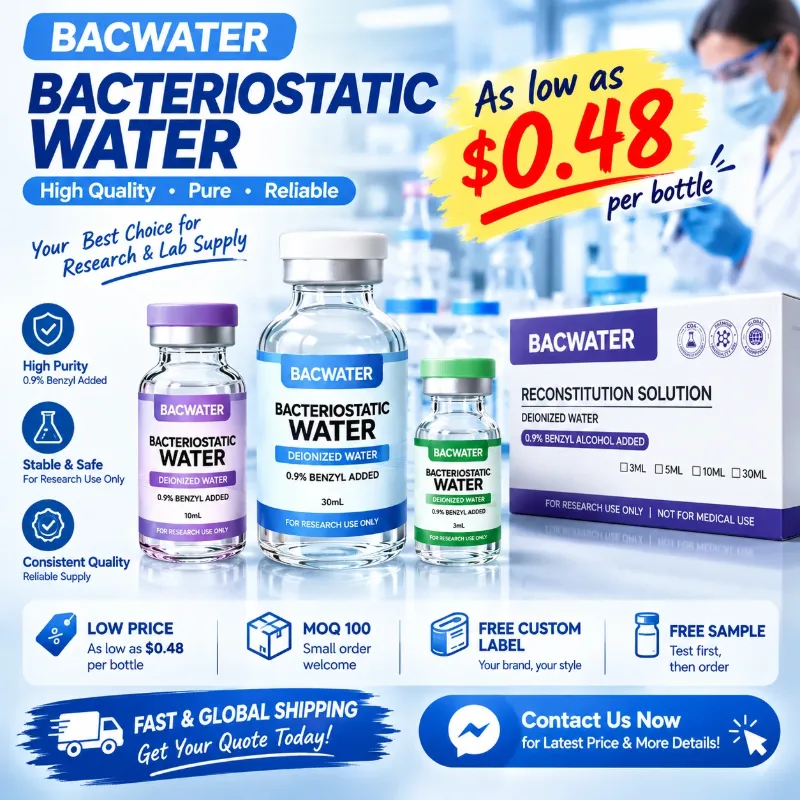
| Typical vial sizes | 3ml, 5ml, 10ml, 30ml, 100ml |
The preservative works by making the environment inhospitable to bacteria and fungi, but it does not sterilize an already-contaminated vial. Proper aseptic technique still matters. Think of benzyl alcohol as a safety net, not a substitute for clean handling.
How the Preservative Affects Storage and Shelf Life
One of the most common questions researchers ask is how long a punctured vial stays usable. The answer depends on storage conditions and handling, but the 0.9% benzyl alcohol is what makes extended use possible at all.
- Store upright in a cool, dry place. Avoid direct sunlight and heat.
- Wipe the rubber stopper with alcohol before every draw.
- Use a fresh sterile needle each time you puncture the seal.
- Check for cloudiness or particles before each use and discard if anything looks off.
Most manufacturers recommend discarding an opened vial after roughly 28 days. That guideline is not arbitrary — it reflects the point at which the preservative can no longer be relied on to keep the contents safe. Tracking your open date is a small habit that prevents a bigger problem.
Choosing the Right Vial Size for Your Workflow
Bacteriostatic water comes in several sizes, and the right one depends on how often you reconstitute and how many vials you go through. Smaller sizes reduce waste for occasional use, while larger bottles suit busy labs.
- 3ml and 5ml — good for occasional, single-reconstitution work.
- 10ml — a flexible middle ground for routine use; see our 10ml bacteriostatic water vial.
- 30ml — the workhorse for labs that reconstitute daily; consider bulk 30ml bacteriostatic water to keep costs down.
- 100ml — for high-volume facilities that prioritize fewer reorders.
Buying in bulk usually lowers the per-vial cost, but only makes sense if you can use the supply before it expires. Match the size to your actual throughput rather than ordering the largest option by default.
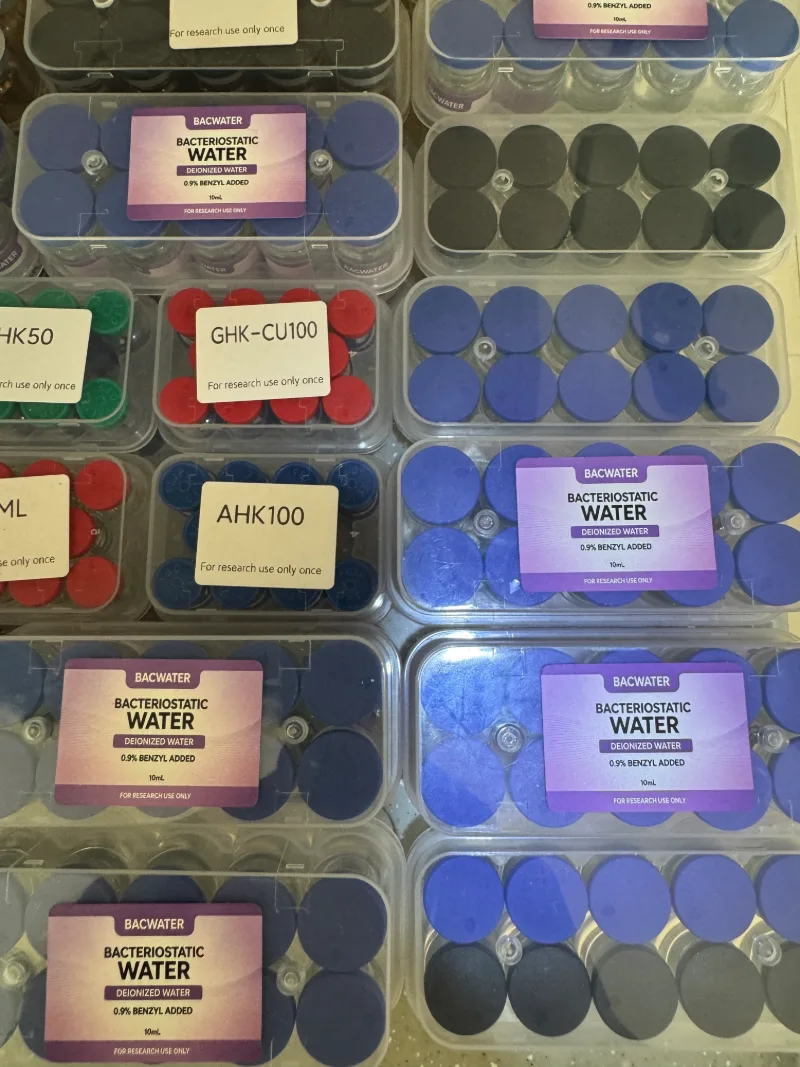
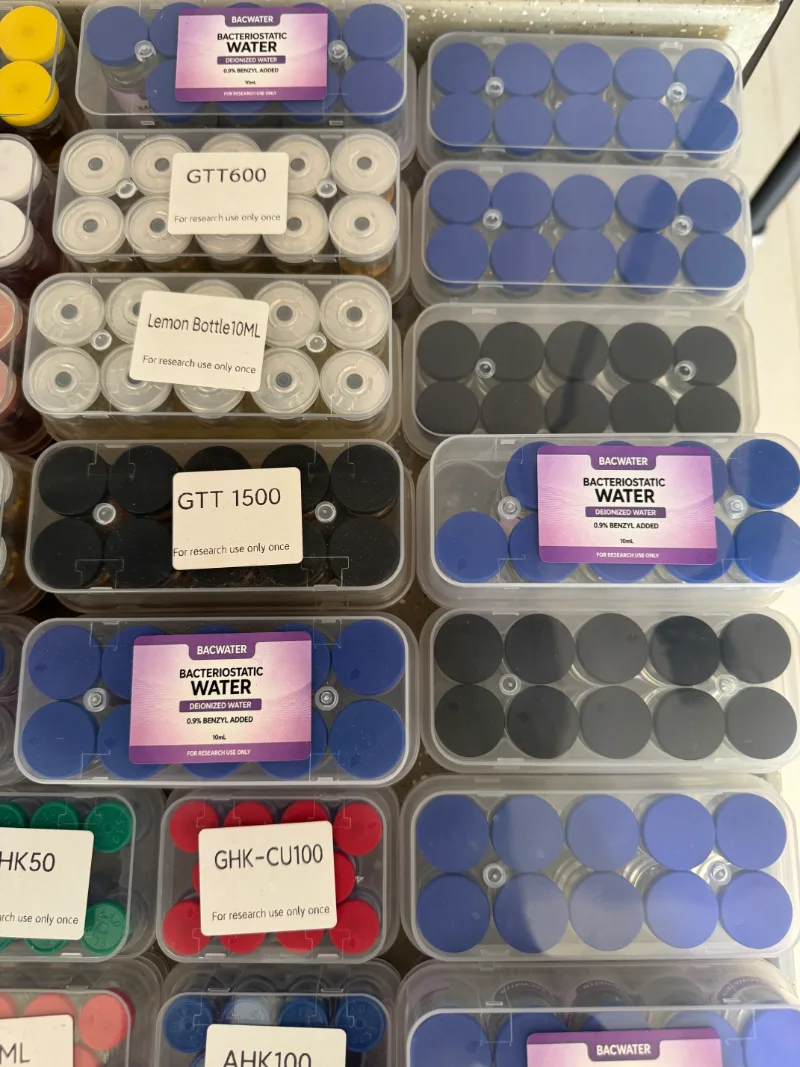
Proper storage keeps bacteriostatic water 0.9% benzyl alcohol stable and ready for repeated use.
What to Look For When You Buy
Not every supplier labels or stores their product the same way. When you source bacteriostatic water for research, a few checks separate a reliable batch from a risky one.
- Clear labeling — the concentration (0.9% benzyl alcohol) and fill volume should be printed plainly.
- Intact seals — any damaged or leaking vial should be set aside immediately.
- Documented sourcing — a supplier that can answer basic quality questions is a better bet than one that cannot.
For labs that reconstitute peptides regularly, consistency matters as much as price. A stable supplier means you are not re-evaluating a new batch every month.
Final Notes for Research and Sourcing
Bacteriostatic water 0.9% benzyl alcohol is a small purchase that plays a large role in the quality of your work. The preservative keeps multi-dose vials usable, but it only does its job when you store, handle, and source it correctly. If your lab runs through vials steadily, buying reliable bac water in the sizes you actually use saves time and reduces variability between batches. For questions about bulk bacteriostatic water for your peptide research, feel free to reach out on WhatsApp — we are happy to help you match a solvent and vial size to your workflow.